Integration
It can be incorporated into existing software, products and projects, or become part of a solution built from scratch.

AURLINK is Boolmoot’s technology engine for integrating augmented reality, context, devices, data and digital services into real systems and products. It is not a closed app: it is an architecture that adapts to the problem.

From its earliest implementations, AURLINK was conceived as a functionality layer able to integrate with existing developments and expand what they can do. Its evolution keeps that core idea: connect systems, context and user experience.
It can be incorporated into existing software, products and projects, or become part of a solution built from scratch.
It turns environmental references, position and physical events into signals applications can use.
Text, images, audio, video, links, 3D content and actions can move between the system and the user device.
Designed to work across mobile, desktop, web and connected devices within the same solution.
It can adapt responses to the user and generate useful information about interaction, use and behaviour.
AURLINK is configured for each scenario: retail, training, exhibitions, spatial services, industry or applications still to be defined.
RetailAR was one of AURLINK’s early complete demonstrators. It connected a mobile app, business portal, online store, user preferences, augmented reality and analytics. That work showed the value was not one app, but the engine capable of coordinating all of them.
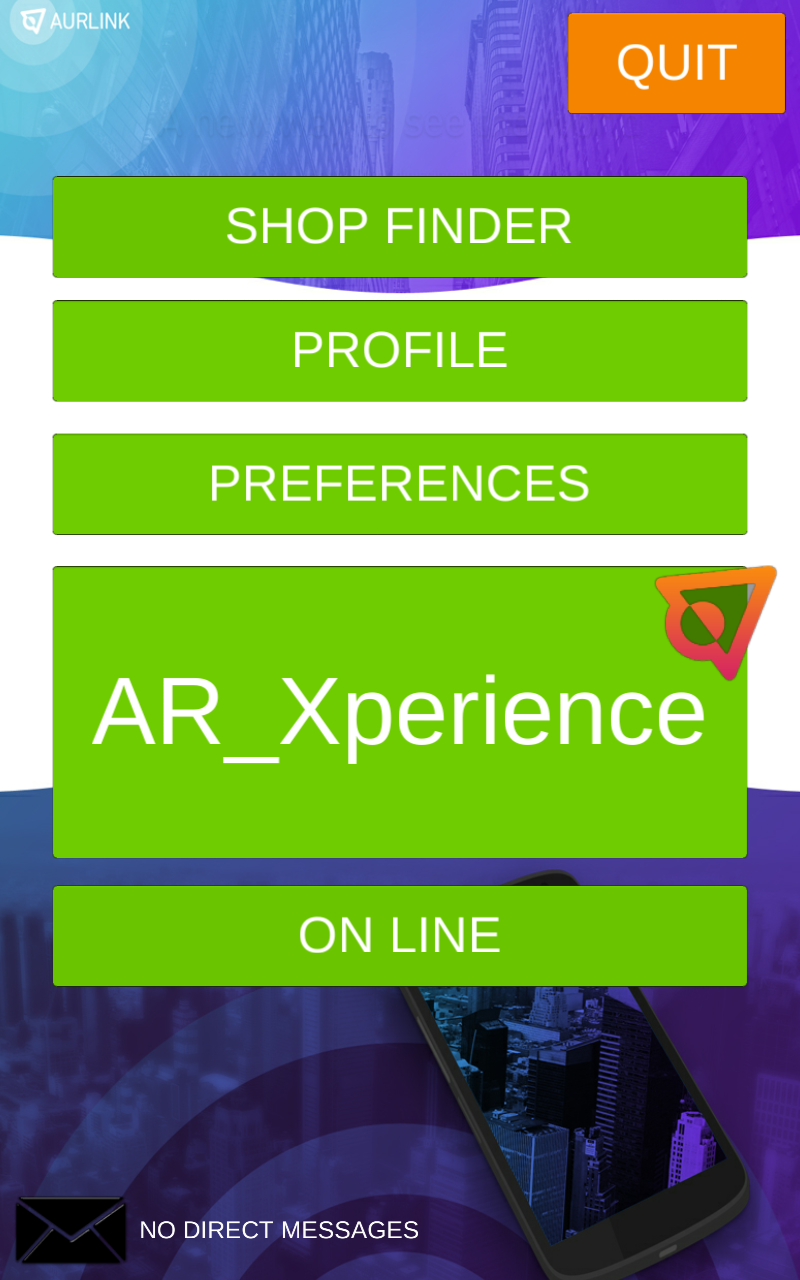
The mobile application acted as a window between the user, the digital system and the physical space, triggering experiences and content according to context.
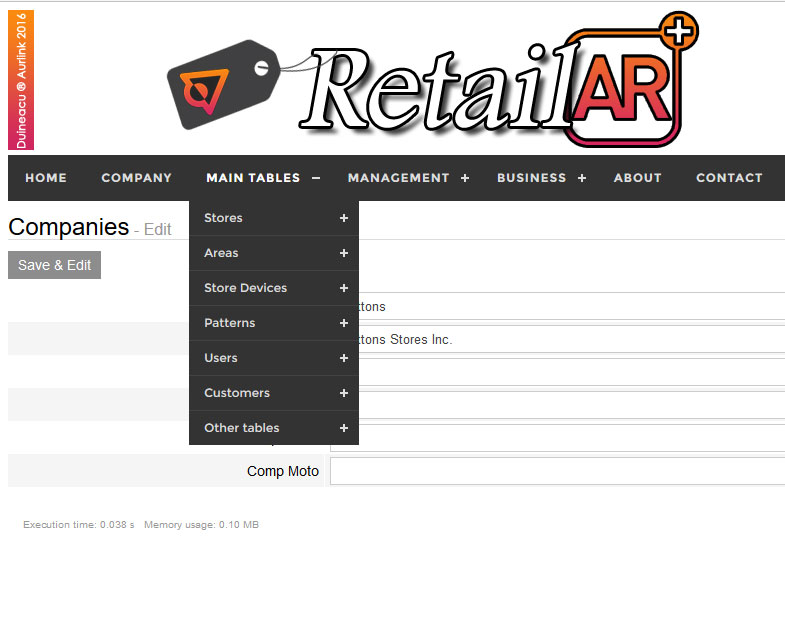
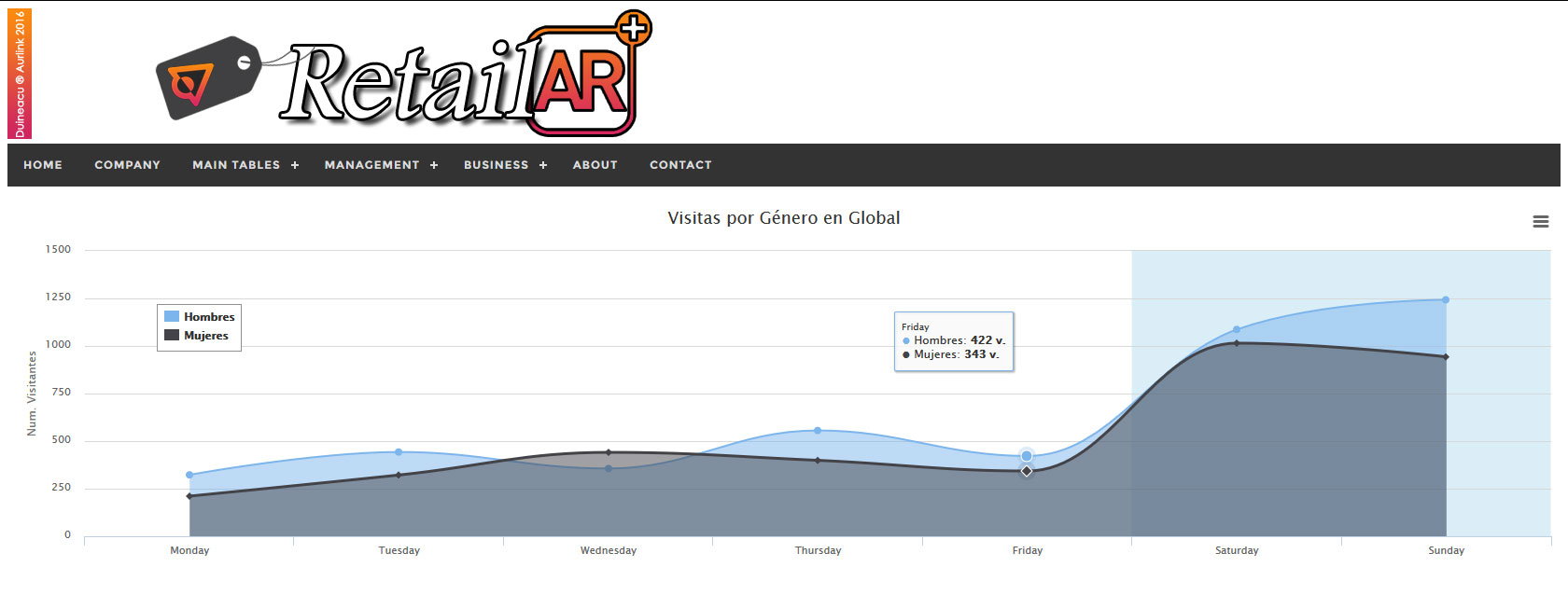
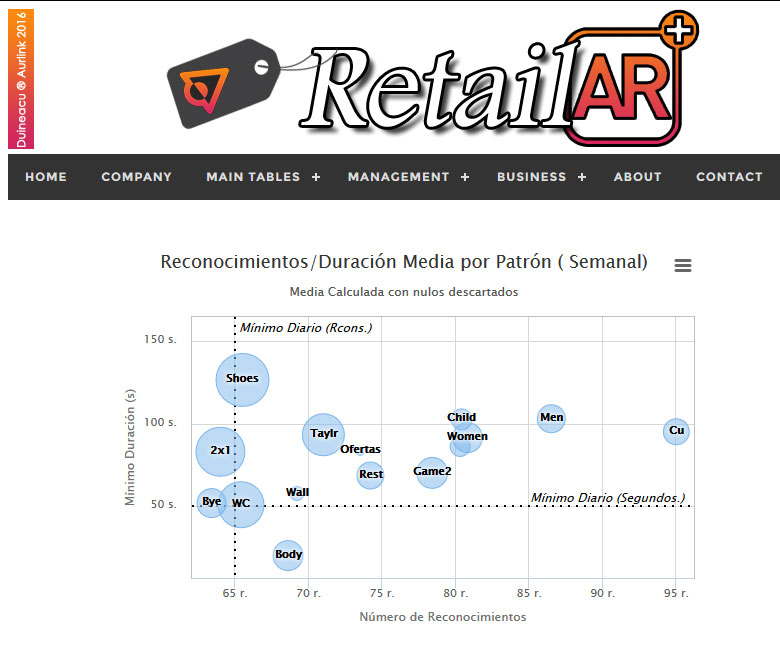
From the beginning, AURLINK was tested across very different scenarios. Retail, presence verification, identity and tourism demonstrated that the technology was not tied to a single application: the core could adapt to different sectors while combining augmented reality, context, data, devices and services.
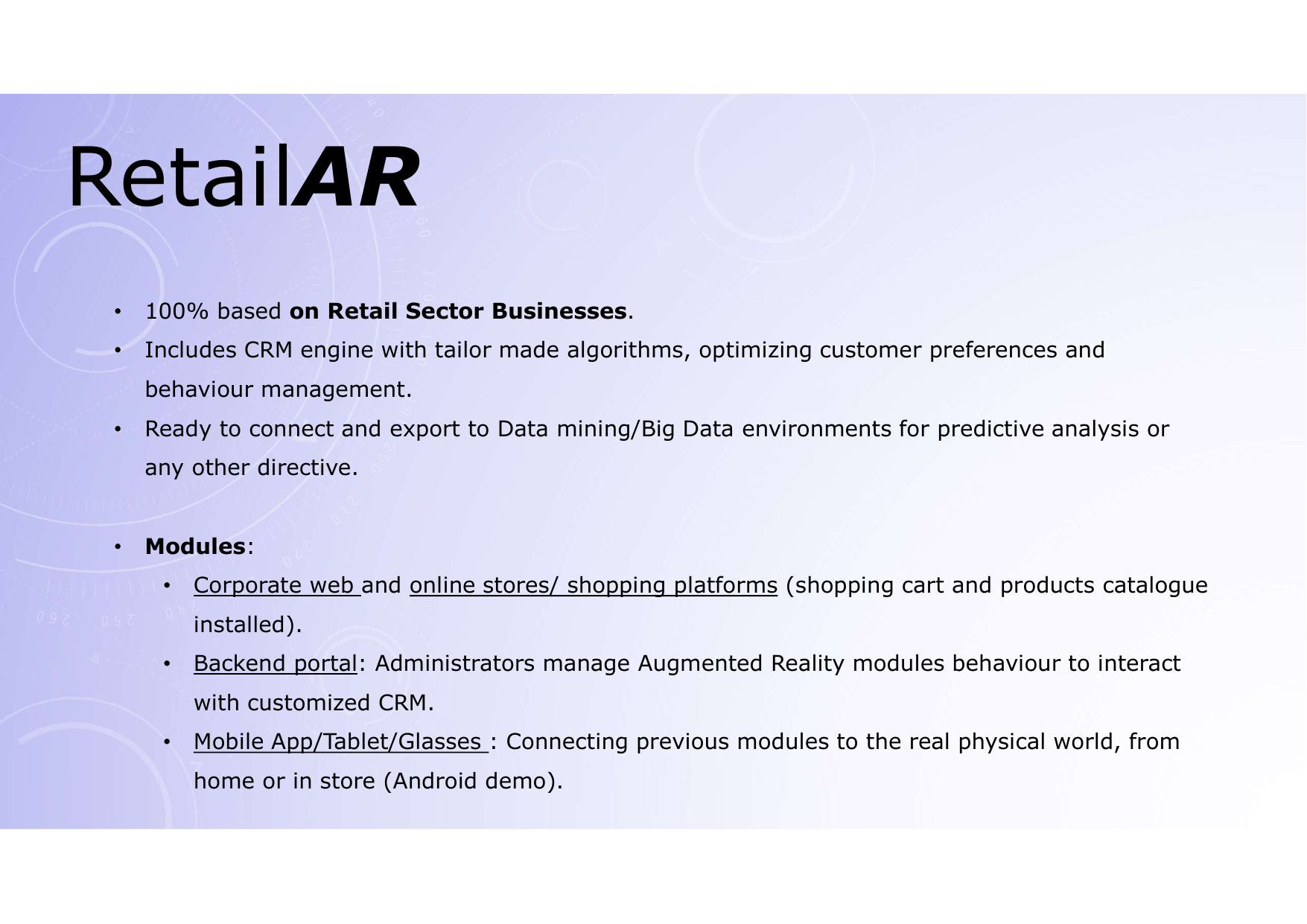
A complete environment linking an online store, business portal, CRM, mobile application and augmented reality. AURLINK could personalise content, guide customers through a store, trigger 3D experiences and gamification, and record interaction for analytics.
RetailAR proved that the engine could coordinate corporate systems, mobile devices and real-world actions at the same time.
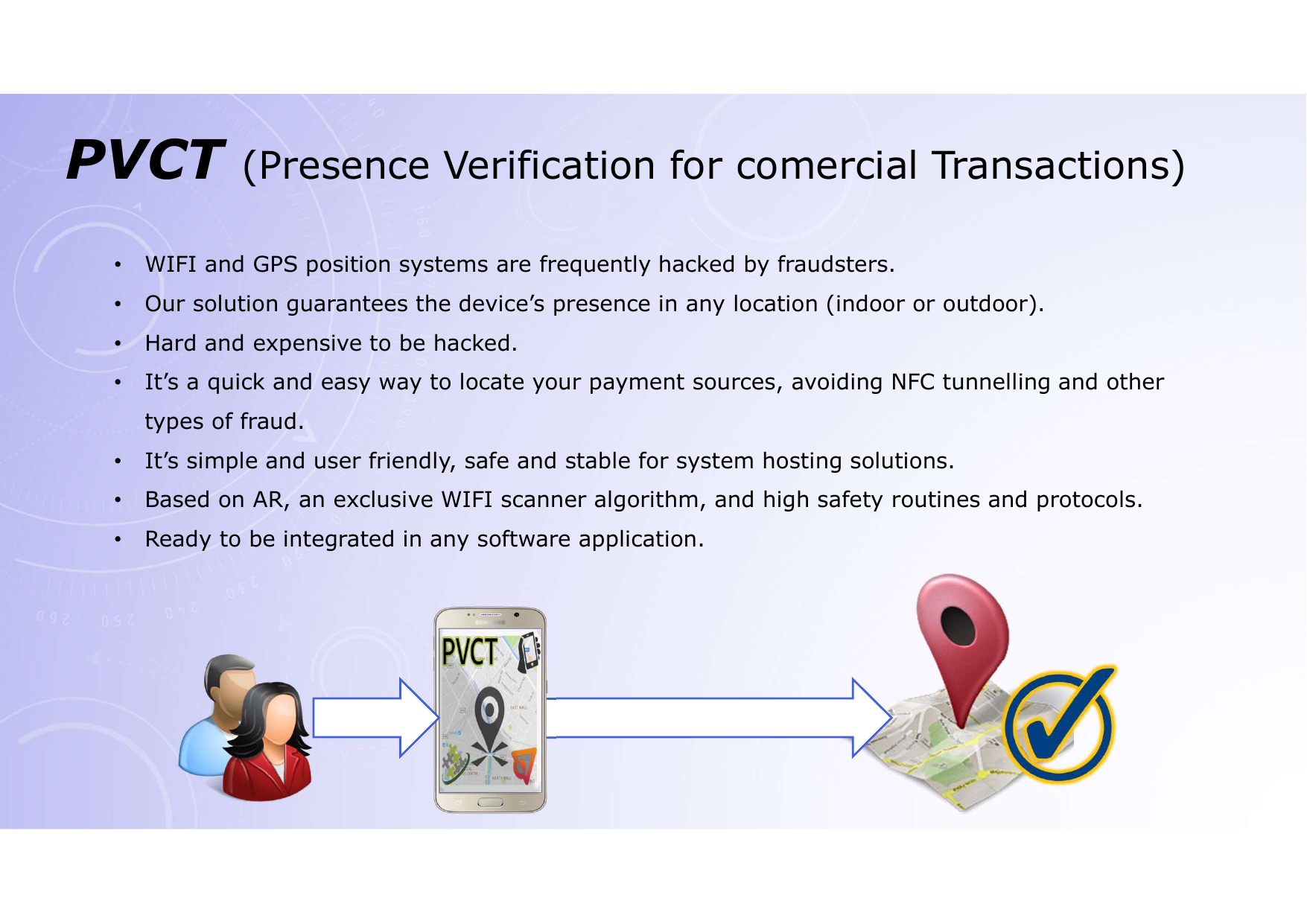
Presence Verification for Commercial Transactions explored how to confirm that a device was genuinely present at a specific indoor or outdoor location.
The concept combined augmented reality, environmental references and validation routines for processes where real physical location is part of security or operation.
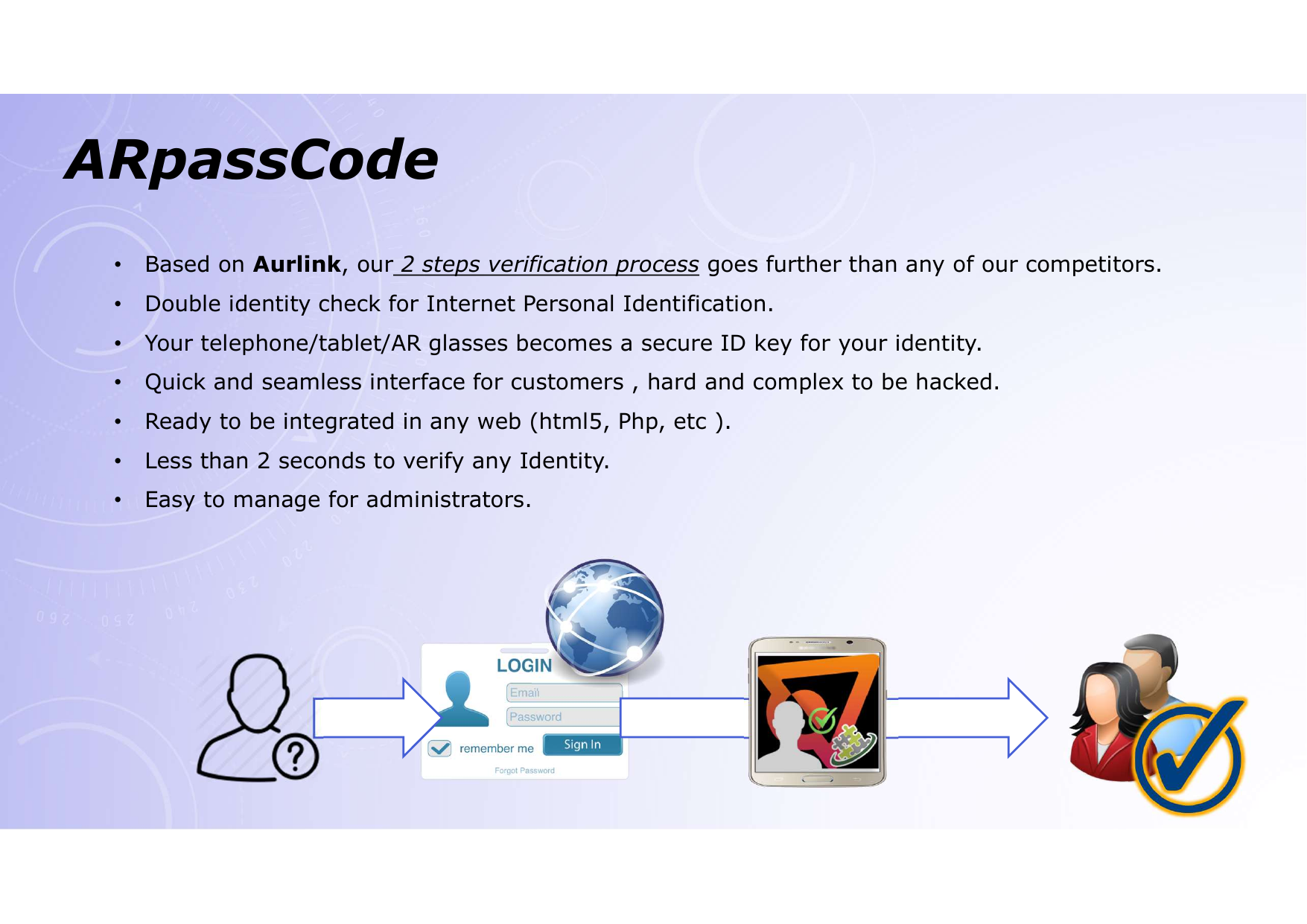
ARpassCode applied AURLINK to a two-step identity verification process. The phone, tablet or compatible device became an active part of the validation.
It demonstrated that the engine could use AR and context not only to display content, but also to participate in authentication and security workflows.
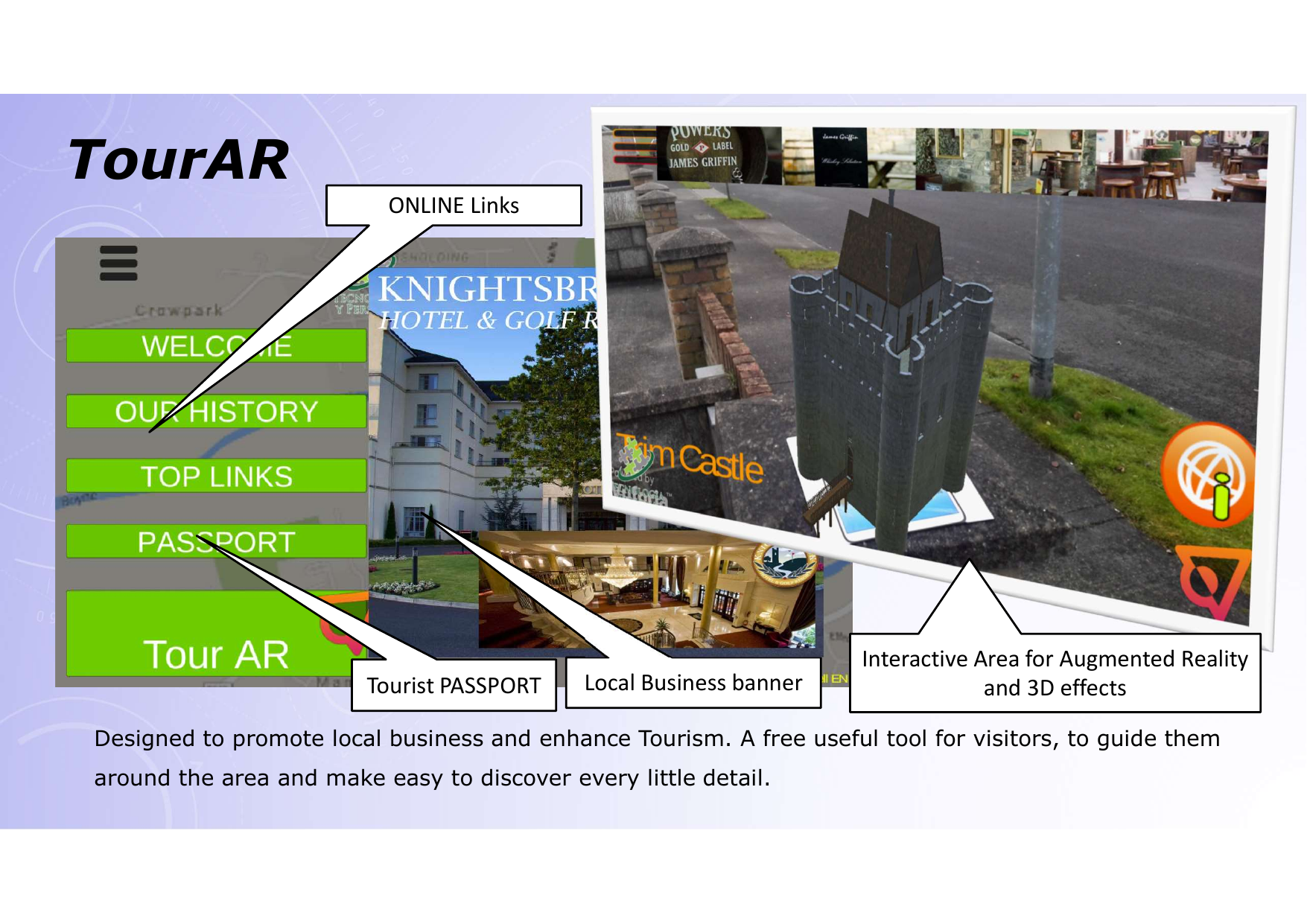
TourAR brought AURLINK into tourism and local promotion: points of interest, contextual information, routes, online links, 3D content and connections with nearby businesses inside a mobile experience.
The goal was to turn the physical environment into an interactive layer of information and services for visitors.
This video captures one of AURLINK’s historical demonstrations in an augmented-reality environment. The interface belongs to that generation of the product; the technical value lies in the architecture and capabilities it coordinated.
Historical demo. Interfaces and devices shown belong to the original demonstrator generation.
AURLINK can complement VCS in projects requiring spatial interaction and understanding through sound. VCS is currently developed at Crannsoft, where its evolution and dedicated documentation are available.
If a solution needs to connect software, devices, data and the physical environment, we can explore how AURLINK can be applied to that scenario.